If your child wakes up scratching every night and nothing you try seems to work, you are not alone, and you are not failing as a parent. Eczema in kids affects roughly 1 in 5 children worldwide. That is about 10.4 million children in the U.S. alone, according to the National Health and Nutrition Examination Survey.
So many families go through this. The hard part is that most parents receive very little guidance on what to actually do beyond putting on cream and hoping for the best.
This guide changes that. It covers what eczema really is, what sets it off, and what works in 2026. For pediatric support near Deptford, visit Deptford Medical Center.
What Is Eczema in Children?
Eczema is a skin condition that shows up as dryness, itching, and inflammation on the epidermis. The medical name coined for this chronic condition is atopic dermatitis.
The American Academy of Pediatrics released an updated clinical report in 2025 confirming that eczema comes from a mix of genetics, immune system differences, and a weakened skin barrier. It has nothing to do with cleanliness or how well you care for your child.
Children with eczema often lack enough of a protein called filaggrin in their outer skin layer. Without it, the skin loses moisture easily and lets irritants in. That is why the skin stays dry, cracked, and reactive even between visible flares.
One thing many parents worry about is spreading. Eczema is not contagious at all. Your child cannot pass it to a sibling, a classmate, or anyone else. It usually starts before age 5, and many babies show their first symptoms between 3 and 6 months old.
Eczema in Kids: Causes and What Triggers Flares
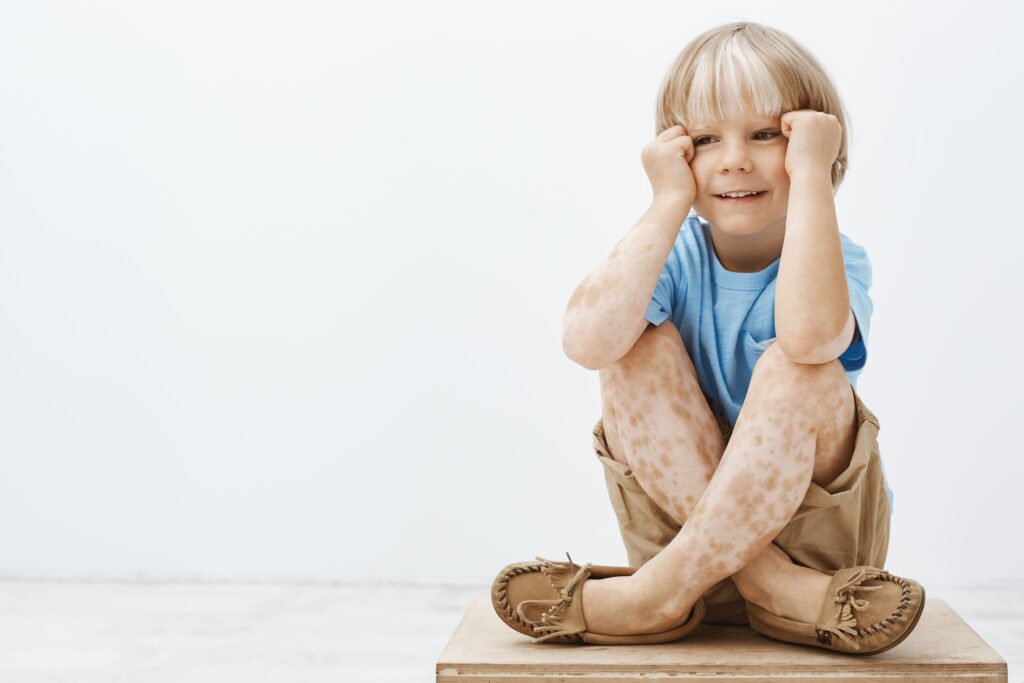
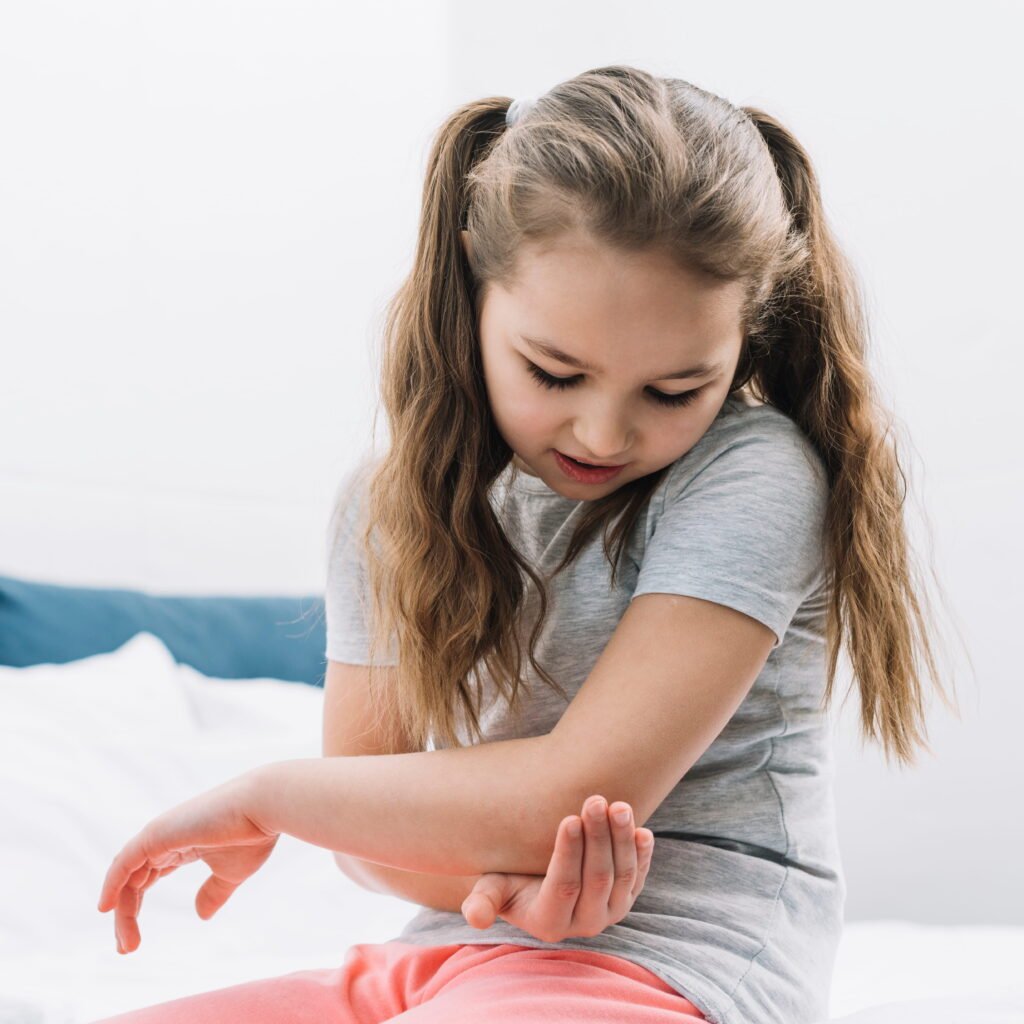
Eczema in kids shows up as dry, itchy, inflamed skin with red or scaly patches that come and go. In babies, the rash tends to appear on the face, especially the cheeks, and sometimes the scalp, wrists, and ankles. As children get older, it usually moves to the elbow creases, the backs of the knees, the neck, and around the eyes.
One of the hardest parts for families is sleep disturbance due to itching. Children stay up through the night, wake up exhausted, and struggle to focus at school.
The 2025 AAP report found that eczema symptoms tend to hit Black and Hispanic children harder, and both groups miss more school days because of flares.
So, what actually starts a flare?
Dry weather pulls moisture from the skin fast. Allergies to dust, pollen, and pets push inflammation higher. Harsh soaps and detergents break down the skin’s protective layer. Heat and sweat during outdoor play or even sleeping under heavy blankets can trigger a flare just as easily.
Foods to Avoid With Eczema in Toddlers
A lot of parents try cutting foods first. That makes sense because you want to do something. The most commonly linked foods are cow’s milk, eggs, peanuts, soy, and wheat.
However, the 2025 AAP report made something very clear. While up to 40% of children with eczema also have food allergies, food does not cause eczema itself. It can worsen flares in some severe cases, but it is not the root cause.
Cutting out food groups without proper testing can actually hurt your toddler’s nutrition and may raise the risk of developing a true allergy later.
So instead of guessing, keep a simple diary. Write down what your child eats and note when flares appear. Then bring that diary to a pediatric appointment so the doctor can order the right tests before any food gets cut.
How Long Does Eczema Last?
This question comes up in almost every conversation I have with parents. The honest answer is that eczema is a long-term condition. It does not simply clear up after a few good weeks. However, that does not mean it stays severe forever.
Nemours Health reports that about half of all children with eczema see real improvement between ages 5 and 15. Some outgrow it completely. Others still have it as adults but find it much milder and easier to manage than it was in childhood.
The key is not waiting around. Children who get consistent care, daily moisturizing, and proper treatment during flares tend to do much better over time than those who go unmanaged.
Pediatric Eczema Treatment Options
Child eczema treatment works best when it covers three things together: daily moisturizing, reducing inflammation during flares, and cutting out known triggers.
Moisturizing every single day is the foundation. Thick, fragrance-free ointments like Vaseline, Aquaphor, or CeraVe work better than regular lotions for most children. Apply it at least once a day, and more often during dry weather or after baths.
During flares, pediatricians usually start with low-potency topical corticosteroid creams. These reduce redness and itching safely when used correctly.
Beyond steroids, 2024 and 2025 brought real progress. Dupilumab, sold as Dupixent, now has FDA approval for children as young as 6 months old and works well for moderate to severe eczema.
Tapinarof received approval for children aged 2 and older in 2024. Then, in October 2025, roflumilast 0.05% cream got FDA approval for mild to moderate eczema in children aged 2 to 5 years. Parents today have far more treatment options than families had even five years ago.
Eczema in Kids: Home Remedies That Actually Help
Between doctor visits, home care makes a big difference. The soak and seal method is one of the most recommended steps. Bathe your child in lukewarm water for 5 to 10 minutes using a fragrance-free cleanser like Cetaphil or CeraVe. Pat the skin gently dry, then apply moisturizer right away before the skin finishes drying. That last part is what makes it work.
Oatmeal baths calm itchy, inflamed skin and are safe for most children. Trimming fingernails short limits the skin damage from scratching at night. Switching to fragrance-free laundry detergent and ditching fabric softeners removes a common hidden trigger. Soft cotton clothing is always a better choice than wool or synthetic blends against the skin.
Then there is the 3-minute rule for eczema. Pediatric dermatologists recommend applying moisturizer within 3 minutes of getting out of the bath while the skin still holds some of that bath moisture.
This simple habit consistently ranks as one of the most effective daily steps for keeping eczema calmer between flares.
When to See a Doctor or Urgent Care
Home care handles a lot of eczema flares just fine. However, some situations need a doctor sooner rather than later. Schedule a visit if your child’s eczema is not improving after two weeks of consistent home treatment.
Also, go in if the rash starts looking infected, shows yellow crusting, oozes, or comes along with a fever. Head to urgent care or call your pediatrician the same day if the skin looks very red and raw over a large area, if your child cannot sleep at all from itching, or if blisters suddenly appear.
These signs often mean a bacterial skin infection has developed on top of the eczema. That needs antibiotics quickly.
Where Can I Take My Child for Eczema Treatment Near Me in Deptford?
Parents in the Deptford area do not have to figure this out alone. Deptford Medical Center’s pediatric primary care team works with children of all ages, managing eczema. They help identify your child’s specific triggers, build a practical treatment plan, and prescribe medication when home care needs backup.
What triggers eczema in children?
Dry weather, dust mites, pet dander, pollen, heat, sweat, harsh soaps, and rough fabrics are the most common triggers. Some children with severe eczema also react to certain foods like dairy, eggs, or wheat.
How to treat eczema in kids?
Moisturize daily with a thick fragrance-free ointment. During flares, use a prescribed topical steroid or newer non-steroid cream. Follow the soak and seal bath method and avoid your child’s known triggers.
What is mostly mistaken for eczema?
Psoriasis, ringworm, contact dermatitis, and seborrheic dermatitis all look similar. A pediatrician can tell the difference and make sure your child gets the right treatment for the right condition.
Does eczema in kids go away?
About half of all children with eczema improve significantly between ages 5 and 15. Some outgrow it completely. Others carry it into adulthood, but in a much milder form.
How did I cure my child’s eczema?
Eczema has no cure. However, many families reach a point where flares are rare and manageable. Consistent daily moisturizing, avoiding triggers, and treating flares early is what gets children there. Routine matters more than any single product.
My baby has eczema, and it is getting worse. Should I go to urgent care?
Yes. If the skin looks infected, has yellow crusting or ooze, or your baby has a fever alongside the rash, go to urgent care or call your pediatrician that day. Catching skin infections early prevents them from spreading and getting harder to treat.
Final Thoughts
Dealing with eczema in kids is exhausting, especially when flares keep coming back no matter what you try. But this condition is manageable. Families who stick with daily moisturizing, learn their child’s specific triggers, and get real medical support see far fewer flares over time.
Do not let your child go untreated and hope it improves on its own. The longer the skin stays inflamed without proper care, the harder it becomes to control. The pediatric team at Deptford Medical Center is ready to help you build a plan that actually works.