
Oftentimes, people take ear pain as a minor issue, something that will resolve in a day or two. Do you know this minor inconvenience, ear pain, or fluid buildup in the middle ear can throw off your entire sense of balance, and surprisingly, your vision too? In this blog, we tell you about ear fluid causes in depth.
This happens through a tight link between the ears, eyes, and brain. When things go wrong, everyday movements can leave you feeling unsteady, spinning, or like the world is out of focus. The middle ear sits behind the eardrum and connects to the throat via the Eustachian tube. Normally, this tube equalizes pressure and drains any mucus.
Usually, it gets blocked due to allergies, colds, sinus issues, or Eustachian tube dysfunction (ETD). The reason for the blockage is the fluid that gets trapped. The condition is called otitis media with effusion (or serous otitis media), and while it’s common in kids, plenty of adults deal with it too.
Symptoms of Fluid in Ear
Fluid in the ear symptoms often include the following:
- A plugged or full feeling
- Muffled hearing
- Popping or clicking sounds
- Mild pressure or discomfort
- Sometimes there is no pain at all
More troubling are the balance and vision effects. Fluid creates inner ear pressure that disrupts the vestibular system, the part responsible for equilibrium.
It can lead to dizziness, unsteadiness, or true vertigo (spinning sensation). In some cases, people notice visual vertigo, dizziness triggered by busy visual scenes like supermarkets, scrolling screens, or driving.
Why Blurred Vision Happens
The connection comes down to the vestibulo-ocular reflex (VOR). This particular reflex keeps your eyes steady when your head moves so the world doesn’t blur during normal activity.
Signals from the inner ear’s semicircular canals tell the eyes exactly how to counter head motion.
When middle ear fluid interferes, and it especially affects nearby structures or causes inflammation, it can throw off these signals.
The brain gets mismatched info from the ears and eyes, leading to instability in gaze. This often shows up as blurred vision, trouble focusing, or even subtle nystagmus (involuntary eye jerking). In severe or prolonged cases, people describe oscillopsia, where objects seem to bounce or move when they shouldn’t.
It’s not that the fluid directly touches the eyes; it’s the disrupted balance input that confuses eye coordination. Related conditions like labyrinthitis (inner ear inflammation) or even Ménière’s disease (excess inner ear fluid) produce similar combos of vertigo, nausea, and visual changes.

Can an ear infection cause double vision in adults?
Usually not directly from simple middle ear fluid, but if inflammation spreads or pressure affects nerves, visual disturbances, including double vision, can occur, though that’s rarer and warrants a quick medical check.
Ear leaking clear fluid, with no pain or fluid discharge from the ear while sleeping, is different, often from a ruptured eardrum or CSF leak (rare but serious). Clear fluid leaking needs immediate evaluation to rule out bigger issues.
Can Fluid in My Middle Ear Lead to Dizziness?
Yes, absolutely. Even without active infection, trapped fluid can press on structures and impair vestibular function. As a result, you can feel the imbalance, spinning, or lightheadedness. Studies show positional nystagmus or spontaneous eye movements in many kids and adults with middle ear effusion.
How to Treat Fluid in Ear
Treatment depends on the cause and duration. Many cases clear on their own in weeks to months. Home remedies: If it is a mild condition, and there is no progression, yes, you can continue the home remedies. It is recommended to stay hydrated, use a humidifier, and avoid irritants such as smoke.
Also, try the gentle Valsalva maneuver (pinch nose, gently blow) or the Toynbee maneuver (swallow while pinching the nose) to open the Eustachian tube. A few over-the-counter decongestants or nasal steroids sometimes help if allergies or congestion are involved.
- Medical options: If the condition doesn’t change, doctors usually prescribe oral steroids, stronger nasal sprays, or antibiotics. These are mandatory if infection is suspected. For chronic buildup, ear tubes (tympanostomy) are a good option for complete drainage.
- Vestibular system exercises: Once the acute phase passes, simple VOR exercises, like focusing on a fixed point while slowly turning your head, can retrain the reflexes. Balance work (standing on foam, walking heel-to-toe) helps too. A vestibular therapist tailors these best.
Read More About Adult Primary Care and Primary Pediatric Care
How to drain fluid from the middle ear at home?
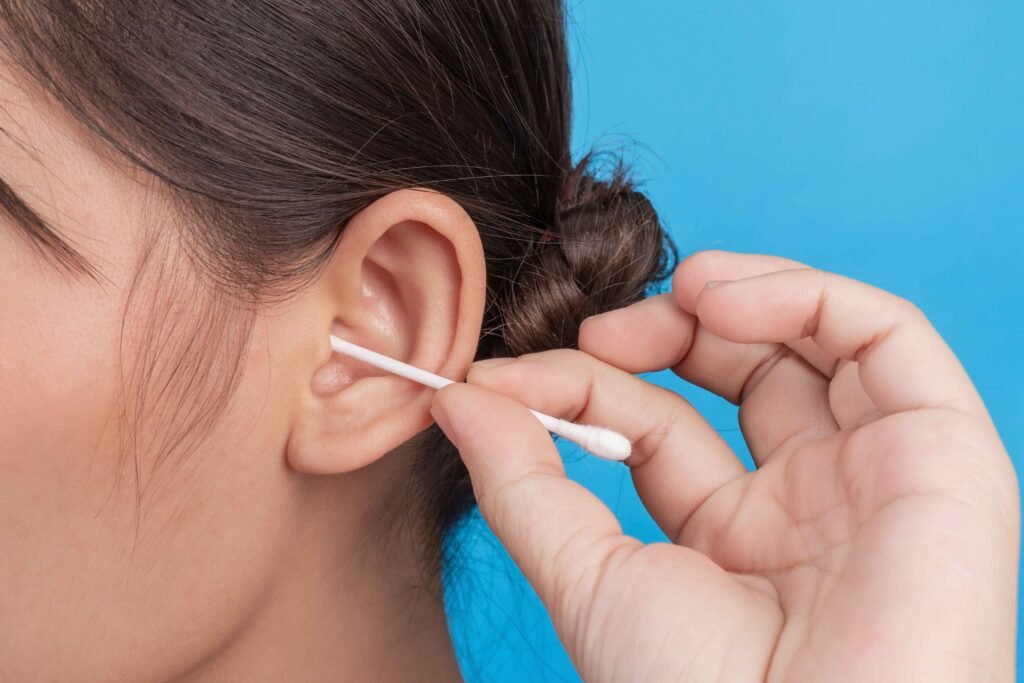
No reliable DIY drain exists. While the condition hasn’t changed, avoid using cotton swabs or any other forceful methods; only focus on pressure equalization and reducing inflammation.
What causes fluid in the ear but no infection?
Often ETD is caused by allergies, altitude changes, smoking, or acid reflux irritating the tube. Most resolve without drama, but see an ENT if symptoms last over a few weeks, worsen, or include severe vertigo, hearing loss, or neurological signs.
Understanding this ear-eye link explains why a “simple” clogged ear can make the world feel unsteady and hazy. Addressing the fluid usually restores clear balance and clearer sight.